In Search Of the Perfect Sazerac

By Eric W. Johnson


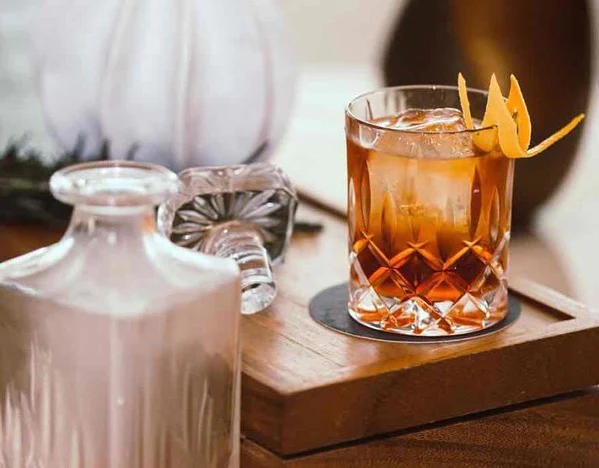
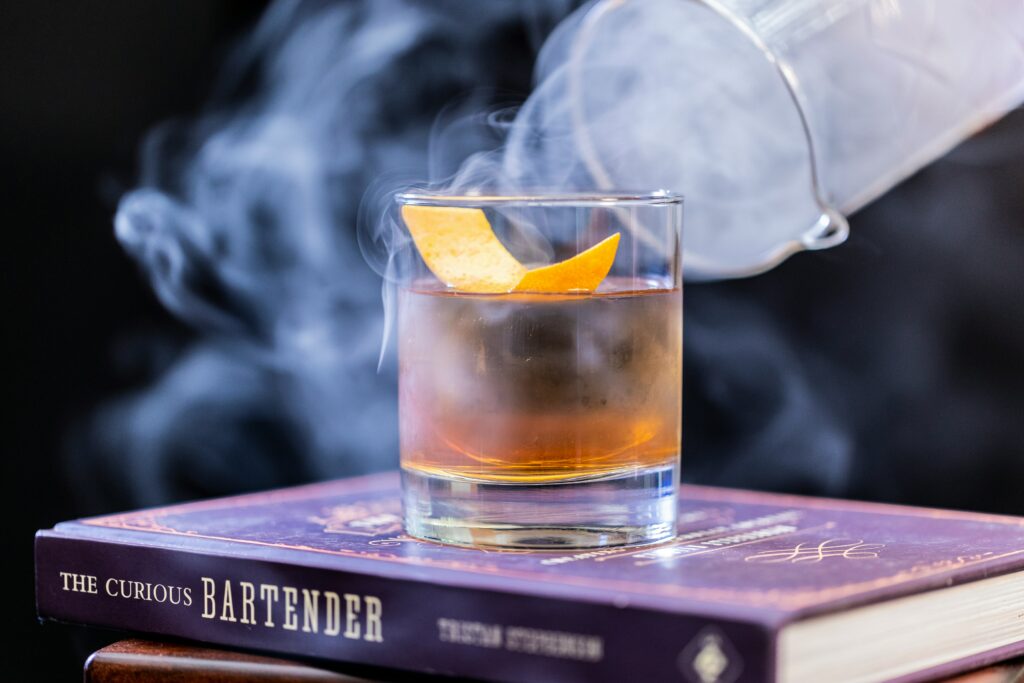
Appropriately enough, it all began over a cocktail.  A friend and I were enjoying a Sazerac at the bar at the Napoleon House in the French Quarter of New Orleans, and savoring its unique flavors of rye whiskey, Herbsaint, and bitters.  I stated that the best Sazeracs in town are made at the Napoleon House, while my companion opined that the ones at the Upperline Restaurant were just as good.  That’s when the idea for a Sazerac tasting was born.

Napoleon House

The Sazerac has a very impressive lineage.  The key ingredient is Peychaud’s bitters, first touted in the 1830s by Antoine Peychaud, who managed an apothecary shop in the French Quarter, as a cure for what ailed you.  Sazerac doubled as an ingredient in the brandy toddies he also served his lodge brothers after hours.  These toddies were served in a porcelain egg cup known as a coquetier, from which the term “cocktail” arose.  Sewell Taylor, a local businessman, had opened a number of “coffee houses” (read “saloons”) during that time, including the Merchants Exchange Coffee House.  When Taylor relocated his business and opened a liquor store, the Merchants Exchange was purchased by Aaron Bird and renamed the Sazerac Coffee House. Toddies made with the French brandy Sazerac-de-Forge et fils and Peychaud’s bitters were featured.  The drink was known as the “Sazerac,” and became America’s first branded cocktail.

In 1869, after the death of the Coffee House’s owner, it was purchased by Thomas Handy, who had once clerked for Sewell Taylor.  Handy altered the recipe for the Sazerac four years later, substituting American rye whiskey for the brandy and adding a splash of absinthe.  Since the 1930s the absinthe has been replaced with a version manufactured in New Orleans and called Herbsaint.  In 1949, the Sazerac Bar relocated to the Roosevelt Hotel (which became the Fairmont Hotel), and until this New Orleans landmark closed after Hurricane Katrina hit New Orleans in 2005, it became the place to go for a Sazerac.

But back to the business at hand.  The Sazerac tasting was set for a sunny weekend afternoon in September, and armed with notepads, pens, enough money to provide an ample supply of cocktails, and a thirst for this magic libation, we set out on our task.  Our first stop was the majestic Columns Hotel, which had started life as a Greek Revival mansion built on St. Charles Avenue in 1883 by Simon Hernsheim, a cigar and tobacco magnate.  Later a boarding house and eventually a hotel, the Columns was used as the set for a 1917 Storyville brothel in the Louis Malle film “Pretty Baby.”  Climbing the front steps to a wide veranda, entering into the main hall, and stepping into the dark mahogany bar with its 18-foot ceiling transports the visitor into the Gilded Age. The bartender that day, Todd Hubbell, took our drink order, and we watched to see how he approached a Sazerac.  Todd used Sazerac rye, made in Kentucky by the same distillery that supplied the rye whiskey to the Sazerac Coffee House in the late 1800s, as well as Peychaud’s and Angostura bitters, along with Herbsaint and simple syrup.  The result was smooth, not overly heavy on the bitters, and definitely an auspicious beginning to our afternoon’s task.

Our next stop was Tujague’s, New Orleans’ original stand-up bar, which was built in 1827 on the site of an old Spanish armory.  Across the street from the French Market, Tujague’s boasts an excellent restaurant with local Creole cuisine, but its jewel is its tall, mirror-backed bar, “already a century old when it was shipped from a Paris bistro to Guillaume Tujague’s bar,” as author/photographer Kerri McCafferty describes it in  Obituary Cocktail.   Again we felt a part of history as we stood, one foot on a brass rail, waiting for our Sazeracs.  Tujague’s version had less of an Herbsaint flavor and more bitters, and our bartender had used Old Overholt rye, with hints of honey and spice.  Although we preferred the Columns Sazerac, this was certainly a viable alternative.

Feeling both the effects of two Sazeracs and the need for some frivolity, no doubt because of the effects of two Sazeracs, we wandered through the Quarter to another favorite respite, the Carousel Bar at the Hotel Monteleone.   New Orleans’ first revolving bar made its debut in 1940. Patrons make one complete revolution in fifteen minutes.  The bar was renovated in 1990; gaily painted animals adorn the wooden seatbacks, and mirrors and jester’s faces alternate at the top of the carousel.  There are cozy tables in the large room as well, but most people head straight for the bar.  Who can resist a carousel?

We certainly couldn’t.

The Sazeracs made by a very friendly bartender named Eddie were as good as the others we had tasted earlier.  He followed the traditional recipe and used only Peychaud’s bitters.  We realized by now that it was important to be able to distinguish the different flavors of the Herbsaint, the bitters, and even the lemon twist, and that the rye whisky gave the Sazerac a smoothness that bourbon, the usual drink of choice in the South, would not.

After a light meal to offset the increasingly brighter glow caused by the Sazeracs, we wandered back to the original site where the idea of the tasting originated, the Napoleon House, only to find that it was closed for vacation.  We were disappointed; it seemed fitting that we end our search at the place that I still believe has the best Sazerac of all.  Their recipe calls for Old Overhold Straight Rye Whisky, Pernod instead of Herbsaint, and both kinds of bitters, Peychaud’s and Angostura.  Besides, the Napoleon House has long been my favorite bar in New Orleans; its patina of history is as intoxicating as the spirits imbibed at this old, dark, comfortable burrow.  The story goes that former New Orleans mayor Nicholas Girod financed a plan to spirit Napoleon Bonaparte away from his exile on St. Helena and to establish him in a house in the Vieux Carre, now the site of the bar and restaurant.  Before the plan could be carried out, word of Napoleon’s death reached the city.  Now visitors to this quintessential French Quarter structure sit and sip amongst pictures of the emperor and large bust of Napoleon ensconced among the bottles at the bar.  The signature drink there, by the way, is the Pimm’s Cup, and it is delicious.  But for me, the Napoleon House is my first port of call when I’m in the mood for a Sazerac.

Here are slightly different recipes for a Sazerac.  Be adventurous, try them all and see which one you prefer.

Sazerac Bar, Fairmont Hotel

One jigger cognac or rye whiskey
Crushed sugar cube
3 dashes Peychaud’s bitters
2 dashes Angostura bitters

Chill in a shaker, strain into a glass laced with Pernod or Herbsaint, garnish with a lemon twist.


Napoleon House

One teaspoon simple syrup
3 drops Angostura bitters
4 drops Peychaud’s bitters
1 ˝ ounces Old Overhold Straight Rye Whiskey
A few drops Pernod
Lemon peel

Chill a short rocks glass with ice, then pour out the ice.  Add the bitters, swirling the drops in the glass.  Add the rye whiskey.  Add the simple syrup.  Add drops of Pernod evenly around the glass.  Rub the lemon peel on the rim of the glass and then twist it into a garnish.

Chuck Taggart, author of the immensely entertaining online Gumbo Pages, offers two methods of creating the perfect Sazerac, along with more of its lure and lore, www.gumbopages.com/food/beverages/sazerac.html

Visit http://www.napoleonhouse.com, http://www.thecolumns.com, http://www.tujaguesrestaurant.com/thebar.html, http://www.hotelmonteleone.com/

Books
Kerri McCafferty. Obituary Cocktail  (New Orleans: Vissi d’Arte, 2001, new edition).  A splendid photographic essay on the great bars of New Orleans, full of atmospheric pictures, fascinating history, and signature drink recipes.

Collier, Phillip.  Missing New Orleans (New Orleans: Ogden Museum of Southern Art, 2005).  This wonderful picture book, which accompanied an exhibit at the Ogden Museum of Southern Art, contains an entertaining history of Antoine Peychaud, his famous bitters, and the evolution of the Sazerac.

Macchione, Mikko.  Napoleon House (New Orleans: Vissi d’Arte, 2006).  A history of the famous house and bar, with photographs by Kerri McCafferty.  The book includes food and drink recipes, including the Sazerac and Pimm’s Cup.

Bannos, Jimmy and Demers, John.  Big Easy Cocktails:  Jazzy Drinks and Savory Bites from New Orleans (Berkeley, CA: Ten Speed Press, 2006).  Drink your way through New Orleans in the comfort of your own home with this fun compilation of drinks and recipes.

Gee, Denise.  Southern Cocktails; Dixie Drinks, Party Potions and Classic Libations (San Francisco: Chronicle Books, 2007).  A mix of classic (including the Sazerac and Pimm’s Cup) and modern drinks popular throughout the South, with recipes for food to serve alongside the drinks.


Eric W. Johnson is the Director of the Sims Memorial Library at Southeastern Louisiana University in Hammond, LA, as well as an avid travel writer.  He is a transplanted Yankee originally from Connecticut.  Since he moved to the New Orleans area in 1996, he has had ample opportunity to write about interesting places, foods, and drinks.

©CocktailAtlas.com

  Back to CocktailAtlas.com

Contact Us: Editor Webmaster


Visit other F&B Travel Atlas sites:
www.ChocolateAtlas.com  www.CoffeeAtlas.com  www.TeaAtlas.com

 
Google
 
Web www.CocktailAtlas.com